Prof. Dr. Hans Jörg Fahr (1939-2026)
Obituary by Michael Bird, Horst Fichtner, Michael Heyl, Uwe Nass,
Gerd Prölss, Max Römer, Horst Scherer, Klaus Scherer,
Norbert Vormbrock, und Eugen Willerding
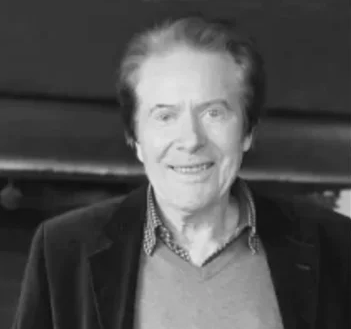 On January 15, 2026, Hans-Jörg Helmuth Fahr, theoretical astrophysicist and retired professor at the University of Bonn, passed away at the age of 86. With his passing, we have lost a researcher who remained highly committed to his work until the very end. Not only did he make a lasting impact on the field of heliophysics through new theoretical concepts and his participation in numerous rocket and satellite missions, but he also motivated many young physicists to pursue careers in space research.
Hans Fahr was born in Hanover in 1939. He began studying physics, mathematics, and philosophy at the University of Bonn in 1959 and graduated with a degree in 1964. In 1966, he earned his doctorate at Walter Weizel's Institute for Theoretical Physics with a thesis entitled “Ion Motion in Electric Fields under the Influence of Charge Exchange Collisions.” He then moved to Wolfgang Priester's Institute for Astrophysics and Extraterrestrial Research (IAEF) as a research assistant. Initially, he was entrusted with investigations into the terrestrial thermosphere and exosphere under the influence of the sun. Rather by chance, this led him to questions about the interaction of the sun with the interstellar medium. After completing his habilitation in astrophysics in 1971, he was appointed university professor at the University of Bonn in 1978. He continued to research and teach at the IAEF, one of the three predecessor institutes of today's Argelander Institute for Astronomy.
Even after his retirement in 2005, he continued to make significant contributions to heliophysics, for example as co-investigator of NASA's Interstellar Boundary Explorer (IBEX) mission, which was launched in 2009. This mission confirmed the existence of interstellar neutral hydrogen atoms near the sun, which he had predicted long ago. Until recently, he worked as co-PI on the GLOWS (GLObal Solar Wind Structure) experiment at the Space Research Centre of the Polish Academy of Sciences in Warsaw. This instrument was integrated with others into NASA's Interstellar Mapping and Acceleration Probe (IMAP) satellite. The launch took place on September 24, 2025, and official measurement operations began on February 1, 2026, which Hans Fahr would certainly have liked to have witnessed.
Hans Fahr was an internationally renowned expert in the field of plasma physics in the solar system. In addition to his work on the physics of interstellar neutral particles, he made numerous fundamental contributions to the physics of the heliosphere. The latter is the comet-shaped region occupied by the plasma flowing away from the Sun, whose outer boundary, following a suggestion by Hans Fahr, is called the “heliopause.” The field of heliophysics, which he helped to establish, had one of its global centers at the University of Bonn, and his group was involved in numerous international programs over many years. From 1973 to 1979, he was vice president and from 1979 to 1982 president of the then fledgling Commission 49 “Interplanetary Plasma and the Heliosphere” of the International Astronomical Union (IAU), as well as a member of the German COSPAR Committee, thus enabling him to further develop heliophysics in terms of scientific strategy. He also succeeded in this at the national level: from 1980 to 1983, he was chairman of the “Professional Association for Extraterrestrial Physics” of the German Physical Society and the independent “Working Group for Extraterrestrial Research.”
However, Hans Fahr's range of interests and activities extended far beyond heliophysics: he also worked in the fields of planetary atmospheres, the cosmogony of the solar system, and cosmology. In connection with the latter, he wrote several critical books in which he expressed that, as a trained philosopher, he always maintained an “outside” perspective on the natural sciences.
Conducting science across national borders was always a major concern for Hans Fahr. Over the decades, long before the era of large-scale international collaborations, he worked with scientists from almost every continent. Very early on, even during the Cold War, he began intensive collaborations with leading scientists from the Polish Academy of Sciences and, towards the end of the 1980s, also with the Russian Academy of Sciences, which lasted for decades. In particular, in recognition of this part of his international impact as an astrophysicist, he was awarded the Federal Cross of Merit 1st Class in 2003. It should also be mentioned that Hans Fahr, as an active sportsman, even organized soccer games in order to promote better understanding and potentially better cooperation across national and, at that time, bloc boundaries.
Even in his old age, he never stopped following current scientific developments, critically questioning new ideas in lively discussions, and making plans for further activities: his knowledge, his enthusiasm for discussion, and his pleasant way of approaching physics and philosophy were a living example and source of motivation for his students and colleagues. We all learned a great deal from Hans, and not just about science: he had interests beyond science and saw the person, the human being, in everyone he interacted with. His work will live on for a long time to come.